

As a supplier of Hydraulic Support Antifreeze, I've often been asked about the intricate workings of the additives in our products. In this blog, I'll delve into the science behind these additives and explain how they contribute to the overall performance of our hydraulic support antifreeze.
The Role of Antifreeze in Hydraulic Support Systems
Hydraulic support systems are crucial in various industries, especially in mining operations. These systems rely on hydraulic fluid to transmit power and ensure the smooth operation of equipment. However, in cold environments, the fluid can freeze, leading to equipment failure and costly downtime. This is where antifreeze comes in. Antifreeze lowers the freezing point of the hydraulic fluid, preventing it from solidifying and maintaining the system's functionality even in extreme temperatures.
Types of Additives in Hydraulic Support Antifreeze
Our Hydraulic Support Antifreeze contains a carefully formulated blend of additives, each with a specific function. Let's take a closer look at some of the key additives and how they work.
Corrosion Inhibitors
Corrosion is a major concern in hydraulic support systems, as it can damage components and reduce the lifespan of the equipment. Corrosion inhibitors are added to the antifreeze to protect the metal surfaces from rust and corrosion. These inhibitors form a protective layer on the metal, preventing oxygen and water from coming into contact with it. This layer acts as a barrier, reducing the rate of corrosion and extending the life of the hydraulic system.
For example, organic corrosion inhibitors such as carboxylates and phosphates are commonly used in our antifreeze. These inhibitors react with the metal surface to form a stable film that adheres tightly to the metal, providing long-lasting protection.
Anti-Wear Agents
Hydraulic systems involve moving parts that are subject to friction and wear. Anti-wear agents are added to the antifreeze to reduce the friction between these parts, minimizing wear and tear. These agents form a thin film on the metal surfaces, which acts as a lubricant and reduces the contact between the moving parts.
One of the most common anti-wear agents used in hydraulic support antifreeze is zinc dialkyldithiophosphate (ZDDP). ZDDP decomposes under high pressure and temperature, forming a protective layer of zinc phosphate on the metal surface. This layer reduces friction and wear, improving the efficiency and reliability of the hydraulic system.
Foam Inhibitors
Foaming can occur in hydraulic systems when air is entrained in the fluid. Foam can cause problems such as reduced lubrication, increased wear, and decreased system efficiency. Foam inhibitors are added to the antifreeze to prevent the formation of foam and to break up any existing foam.
Silicone-based foam inhibitors are often used in our antifreeze. These inhibitors reduce the surface tension of the fluid, making it more difficult for air bubbles to form. They also help to break up existing foam by destabilizing the air bubbles and causing them to coalesce and rise to the surface.
Viscosity Index Improvers
The viscosity of a fluid is its resistance to flow. In hydraulic systems, the viscosity of the fluid needs to remain relatively constant over a wide range of temperatures. Viscosity index improvers are added to the antifreeze to improve its viscosity-temperature characteristics.
These additives are polymers that expand at high temperatures and contract at low temperatures. At high temperatures, the polymers expand and thicken the fluid, maintaining its viscosity and preventing it from becoming too thin. At low temperatures, the polymers contract and allow the fluid to flow more easily, ensuring that the system can operate smoothly even in cold conditions.
How the Additives Work Together
The additives in our Hydraulic Support Antifreeze work together synergistically to provide optimal performance. For example, the corrosion inhibitors protect the metal surfaces from corrosion, while the anti-wear agents reduce friction and wear. The foam inhibitors prevent foaming, and the viscosity index improvers ensure that the fluid has the right viscosity at all temperatures.
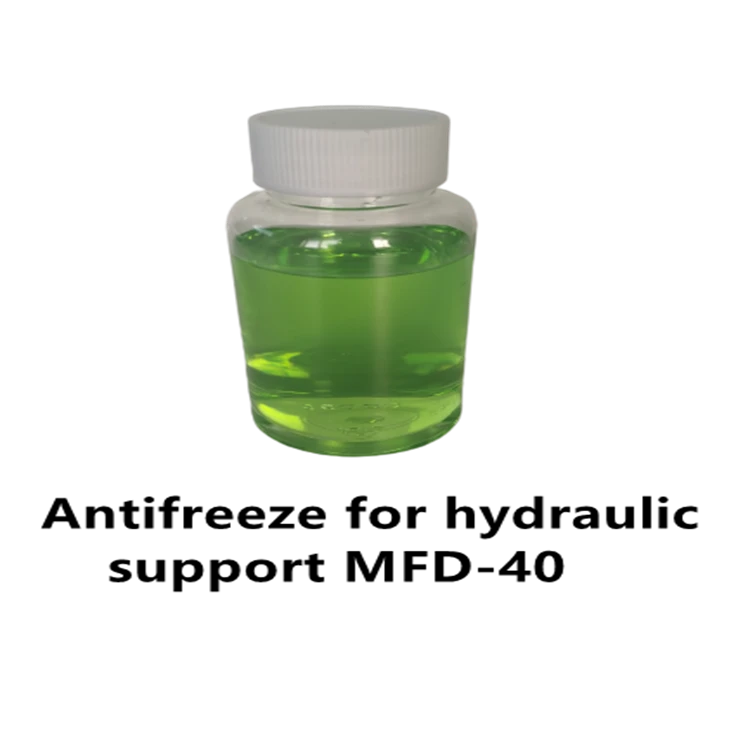

This combination of additives ensures that the hydraulic support system operates efficiently, reliably, and with minimal maintenance. By using our high-quality antifreeze with the right blend of additives, you can extend the life of your equipment, reduce downtime, and save on maintenance costs.
Our Product Range
We offer a range of Antifreeze for Hydraulic Support, Antifreeze for Hydraulic Support, and Antifreeze for Hydraulic Support products, each formulated to meet the specific needs of different hydraulic support systems. Our products are designed to provide excellent performance in a variety of operating conditions, from extreme cold to high temperatures.
Contact Us for Procurement
If you're interested in learning more about our Hydraulic Support Antifreeze or would like to discuss your specific requirements, please feel free to contact us. We have a team of experts who can provide you with detailed information and help you choose the right product for your needs. Whether you're a small business or a large industrial operation, we're committed to providing you with the best quality products and services.
References
- "Hydraulic Fluids: Properties and Performance" by John F. Dobrowolski
- "Corrosion Inhibitors: Principles and Applications" by K. C. Patil
- "Lubrication Fundamentals" by John W. Harris


