

Mining equipment operates in some of the harshest conditions known to industry. High - speed applications within the mining sector push machines to their limits, demanding not only durability from the equipment itself but also superior performance from the lubricating oil. As a prominent supplier of the Mine Lubricating Oil Series, I understand the intricacies involved in ensuring that our products are up to the task of handling high - speed applications in mining equipment.
Understanding High - Speed Applications in Mining Equipment
High - speed applications in mining equipment can occur in various components such as gears, bearings, and hydraulic systems. In crushers, for example, the rotating components need to operate at high speeds to break down large rocks into smaller, more manageable pieces. Similarly, conveyors rely on high - speed motors and gears to transport mined materials efficiently over long distances.

During high - speed operation, friction and heat generation are significant concerns. The faster the moving parts, the more friction is generated between them. This friction can lead to increased wear and tear on the components, reducing their lifespan and potentially causing costly downtime for maintenance and repairs. Heat, on the other hand, can degrade the lubricating oil, reducing its effectiveness and further exacerbating the wear problem.
How Mine Lubricating Oil Series Addresses Friction
One of the primary functions of our Mine Lubricating Oil Series is to reduce friction. Our oils are formulated with high - quality base stocks and advanced additives. The base stocks provide a stable foundation for the oil, ensuring that it can maintain its viscosity even under high - speed and high - temperature conditions.
The additives play a crucial role in friction reduction. Anti - wear additives form a protective film on the surfaces of the moving parts. This film acts as a barrier, preventing direct metal - to - metal contact and reducing the amount of friction generated. For instance, zinc dialkyldithiophosphate (ZDDP) is a common anti - wear additive in our lubricating oils. It reacts with the metal surfaces at high temperatures to create a sacrificial layer that wears away instead of the actual metal components.
In addition to anti - wear additives, our oils also contain friction modifiers. These additives are designed to reduce the coefficient of friction between the moving parts. They can be organic or inorganic compounds that adsorb onto the metal surfaces, creating a slippery layer that allows the parts to move more smoothly against each other. This not only reduces friction but also improves the overall efficiency of the mining equipment.
Heat Dissipation with Mine Lubricating Oil Series
Heat management is another critical aspect of handling high - speed applications. Our Mine Lubricating Oil Series is engineered to have excellent thermal conductivity. This means that the oil can absorb heat from the moving parts and transfer it away effectively.
The high thermal conductivity of our oils is achieved through a combination of the base stock properties and the addition of special heat - dissipating additives. The base stocks we use have inherently good heat - carrying capacities. They can circulate through the equipment, absorbing heat from the hot spots and transferring it to the cooler areas of the system, such as the oil reservoir.
Some of our oils also contain heat - transfer additives. These additives enhance the oil's ability to conduct heat, ensuring that the temperatures within the equipment remain within acceptable limits. By keeping the temperatures under control, we prevent the oil from breaking down and maintain the performance of the mining equipment.
Viscosity Stability under High - Speed Conditions
Viscosity is a crucial property of lubricating oil, especially in high - speed applications. Viscosity refers to the oil's resistance to flow. In high - speed applications, the oil needs to have the right viscosity to provide adequate lubrication. If the viscosity is too low, the oil may not form a thick enough film to protect the moving parts. On the other hand, if the viscosity is too high, the oil can cause excessive drag, reducing the efficiency of the equipment.
Our Mine Lubricating Oil Series is formulated to have excellent viscosity stability. We use viscosity index improvers, which are polymers that help the oil maintain its viscosity over a wide range of temperatures. At low temperatures, these polymers coil up, allowing the oil to flow freely. As the temperature rises, the polymers uncoil, thickening the oil and maintaining its lubricating properties.
This viscosity stability is essential in high - speed mining applications, where the equipment may experience rapid temperature changes. For example, when a crusher starts up, the temperature is relatively low, but as it operates at high speed, the temperature can increase significantly. Our oils can adapt to these temperature changes, ensuring consistent lubrication throughout the operation.
Specific Products for High - Speed Applications
Our Mine Lubricating Oil Series includes several products specifically designed for high - speed applications in mining equipment. For hydraulic systems, which often operate at high speeds and pressures, we offer Concentrate for Hydraulic Support and Concentrate for Hydraulic Support. These products provide excellent lubrication and corrosion protection for the hydraulic components, ensuring smooth and efficient operation.
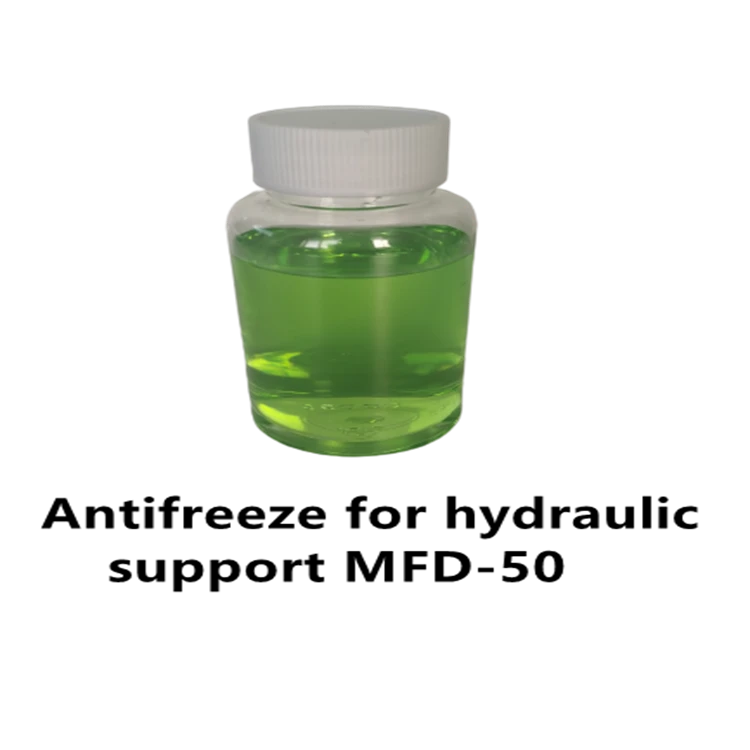
In addition, for applications where cold weather is a concern, we have Antifreeze for Hydraulic Support. This product not only provides the necessary lubrication but also prevents the hydraulic fluid from freezing in low - temperature environments, which is crucial for continuous high - speed operation in mining sites located in cold regions.
The Importance of Regular Maintenance and Oil Analysis
Even with the use of high - quality lubricating oils, regular maintenance and oil analysis are essential for ensuring the optimal performance of mining equipment in high - speed applications. Regular maintenance includes changing the oil at recommended intervals, inspecting the equipment for signs of wear, and replacing any worn components.
Oil analysis is a powerful tool that allows us to monitor the condition of the oil and the equipment. By analyzing the oil samples, we can detect the presence of contaminants, such as dirt, metal particles, and water. We can also assess the degradation of the oil and its additives. Based on the results of the oil analysis, we can take proactive measures to prevent equipment failure, such as adjusting the maintenance schedule or changing the type of oil used.
Contact for Procurement and Expert Advice
If you are in the mining industry and looking for high - quality lubricating oils to handle the high - speed applications in your equipment, I invite you to contact us. Our team of experts is ready to help you select the most suitable products from our Mine Lubricating Oil Series based on your specific requirements. We can also provide advice on maintenance practices and oil analysis to ensure that your mining equipment operates at its best.
References
- Smith, J. (2018). Lubrication Technology for Industrial Machinery. Elsevier.
- Jones, A. (2020). Mining Equipment Maintenance and Reliability. CRC Press.
- ASTM International. (2022). Standards for Lubricating Oils in Mining Applications. ASTM.


