

As a supplier of Metal Cutting Oil TH6050, I often encounter various technical inquiries from customers. One question that has come up quite frequently is about the refractive index of Metal Cutting Oil TH6050. In this blog post, I will delve into the concept of refractive index, its significance in metal cutting oil, and specifically discuss the refractive index of Metal Cutting Oil TH6050.
Understanding the Refractive Index
The refractive index is a fundamental optical property of a material. It is defined as the ratio of the speed of light in a vacuum to the speed of light in the material. Mathematically, it is expressed as (n = \frac{c}{v}), where (n) is the refractive index, (c) is the speed of light in a vacuum ((c\approx 299,792,458\ m/s)), and (v) is the speed of light in the material.
When light passes from one medium to another, its speed changes, and this change causes the light to bend. The refractive index determines the degree of bending, also known as refraction. A higher refractive index means that light travels more slowly through the material and is bent more when entering or exiting the material.
In the context of metal cutting oil, the refractive index can provide valuable information about the oil's composition and properties. Different chemical components in the oil have different refractive indices. By measuring the refractive index of the oil, we can gain insights into its purity, concentration of additives, and overall quality.
Significance of Refractive Index in Metal Cutting Oil
- Quality Control: The refractive index is an important parameter in quality control during the production of metal cutting oil. Manufacturers can use it to ensure that the oil meets the specified standards. A consistent refractive index indicates a stable and uniform product.
- Additive Concentration: Metal cutting oils often contain various additives such as anti - wear agents, corrosion inhibitors, and emulsifiers. The refractive index can be used to monitor the concentration of these additives. Changes in the refractive index may suggest a change in the additive concentration, which can affect the performance of the oil.
- Contamination Detection: Contamination in metal cutting oil can change its refractive index. For example, if water or other foreign substances enter the oil, the refractive index will deviate from the normal range. By regularly monitoring the refractive index, we can detect contamination early and take appropriate measures to maintain the oil's performance.
Refractive Index of Metal Cutting Oil TH6050
The refractive index of Metal Cutting Oil TH6050 is typically in the range of 1.46 - 1.48 at 20°C. This value is determined through precise laboratory measurements using a refractometer. The specific refractive index may vary slightly depending on factors such as the exact composition of the base oil, the type and concentration of additives, and the manufacturing process.
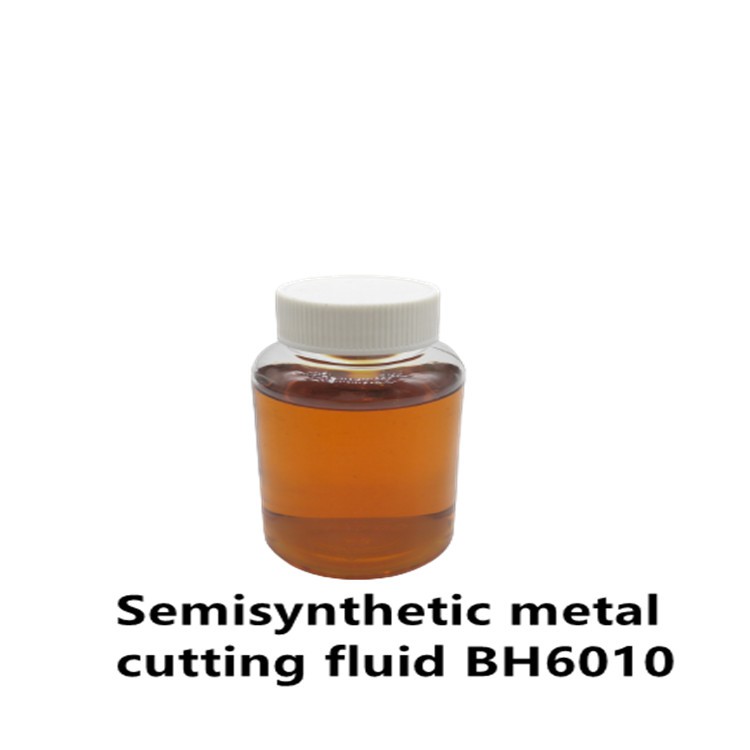

The relatively stable refractive index of Metal Cutting Oil TH6050 within this range indicates its high quality and consistent performance. Our R & D team has conducted extensive research and testing to optimize the composition of the oil to ensure that it maintains a suitable refractive index for efficient metal cutting operations.
The additives in Metal Cutting Oil TH6050 are carefully selected and formulated to provide excellent lubrication, cooling, and anti - corrosion properties. The refractive index reflects the proper balance of these additives, which contribute to the oil's ability to reduce friction, prevent tool wear, and protect the workpiece from corrosion.
Measuring the Refractive Index of Metal Cutting Oil TH6050
To measure the refractive index of Metal Cutting Oil TH6050, a refractometer is commonly used. Here is a general procedure for measuring the refractive index:
- Prepare the Sample: Take a clean and representative sample of Metal Cutting Oil TH6050. Make sure the sample is free from impurities and air bubbles.
- Calibrate the Refractometer: Before measuring the sample, calibrate the refractometer using a standard reference liquid with a known refractive index. This ensures the accuracy of the measurement.
- Apply the Sample: Place a few drops of the oil sample on the measuring prism of the refractometer.
- Take the Reading: Look through the eyepiece of the refractometer and read the refractive index value. Make sure to take the reading at the appropriate temperature (usually 20°C). Record the value accurately.
It is important to note that proper handling and maintenance of the refractometer are crucial for obtaining accurate measurements. Regular calibration and cleaning of the refractometer are necessary to ensure reliable results.
Applications of Metal Cutting Oil TH6050
Metal Cutting Oil TH6050 is widely used in various metal cutting processes, including turning, milling, drilling, and grinding. Its excellent lubrication and cooling properties make it suitable for a wide range of metals, such as steel, aluminum, and copper.
In turning operations, Metal Cutting Oil TH6050 reduces the friction between the cutting tool and the workpiece, resulting in smoother surface finishes and longer tool life. In milling, it helps to dissipate heat generated during the cutting process, preventing the workpiece from overheating and reducing the risk of thermal damage.
For more information about Metal Cutting Oil TH6050, you can visit our website Metal Cutting Oil.
Contact Us for Purchase and Negotiation
If you are interested in purchasing Metal Cutting Oil TH6050 or have any questions about its application, performance, or technical specifications, please feel free to contact us. Our professional sales team is ready to provide you with detailed information and support. We can also offer customized solutions based on your specific requirements. Whether you are a small - scale workshop or a large - scale manufacturing enterprise, we can meet your needs with high - quality products and excellent service.
References
- ASTM D1218 - 12(2017) Standard Test Method for Refractive Index and Refractive Dispersion of Hydrocarbon Liquids.
- "Handbook of Metalworking Fluids" by G. Sarma.
- Technical reports from our in - house R & D department on Metal Cutting Oil TH6050.
